Overview
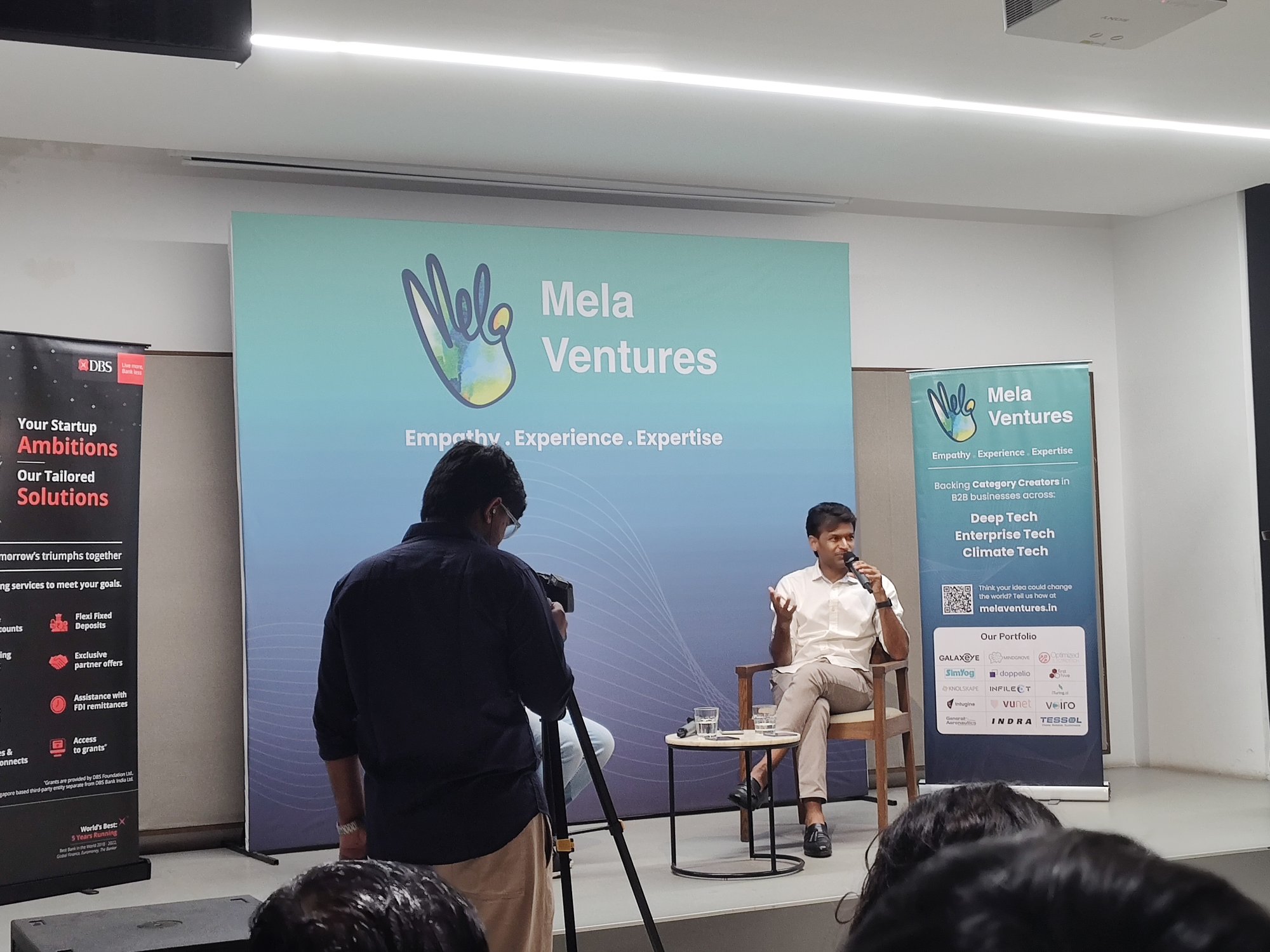
A conversation with Phanindra (Phani) Sama, co-founder of redBus, on building strong early teams. Phani co-founded redBus in 2006 and led it as CEO until the ibibo Group acquired it in 2013. The session was part of FoundrPwr, the founder education series from Mela Ventures, and ended with audience Q&A. These are my notes from the evening, written up from my handwritten pages, so any mistakes are mine.
Speaker: Phanindra Sama, co-founder of redBus
Event: FoundrPwr: Building Exceptional Teams, presented by Mela Ventures (event page)
Hosts: Narendran S, Adithya B and Ashwath
Questions by: Viju George, whose questions made the conversation easy to follow
Venue: Bengaluru
When you can't get both, pick familiarity over competence in a co-founder, and get someone who can sell from day one.
Choosing co-founders
Two things matter in a co-founder: competence and familiarity. If you can't get both, familiarity wins over competence.
Phani looks for comfort, culture fit and some competence. If the competence isn't there at the beginning, that's fine. You go through a lot of ups and downs, and someone you are comfortable with won't leave you hanging.
He has always picked someone he knew rather than going by competence alone. He also invests in companies whose founders already know each other: friends, husband and wife, and so on. The initial co-founders of redBus were almost the same as each other, with no complementary skills.
He does not recommend co-founder matching events, because they could turn out to be a disaster.
His test for a co-founder is one question: "How comfortable are you with this person?"
Have a sales person from day one
Most founders are techies, so the first people in growth and sales should be people who can generate demand and get customers and supply.
Phani highly recommends having a sales person from the beginning of a company, either as an early member or as a co-founder. I wrote "Must!!" next to it in my notes. He noted that most startups with sales people at the very beginning have not failed, and at redBus the sales people who joined early made all the difference.
A sales person can't build the tech, so they stay focused on getting customers and talking to people. That matters because most companies fail from having no customers, when the founders didn't try harder or gave up. That strength comes from a founding team with a close bond, who share and talk with each other.
Sales is not obvious. It takes real practice and skill.
Talk to customers now
When should you reach out to potential customers? Right now, even if you don't have a POC yet.
For every company he started, Phani first listed 100 potential customers, called them and interviewed them. He started building only after he heard yes, or a strong signal that they would use what he was going to build. That way you can never fail. I wrote a longer guide on how to run these conversations: problem discovery, a practical guide to talking to people about their problems.
Conviction and selling the dream
Funding is one validation, but you also need to sell your dream. Have strong conviction and a mission, with no doubt in your heart that this will be a great thing. A very strong, unfailing belief.
Tell the story with the same enthusiasm the nth time as the first time. That is what makes other people join you.
Hiring and culture fit
Phani had a bad experience with a person he hired with competence as the only parameter. That person was culturally different, did not fit in, and tried to force his ways. Another hire was also culturally different, but tried to fit in with the company culture and worked well with the company. The second person fit in while still asking honest questions about why the cultures differed.
His advice: think carefully when the culture doesn't match, even if the competence is very high.
Keeping early people
Looking back, Phani said he should have stopped some of the early people from leaving instead of letting them go. They had the context and had built the company from the early days. If someone isn't completely happy with their current work, give them something they enjoy working on before you let them go.
Early team members feel for the company, know it well and are attached to the vision.
Letting go of popular non-performers can cause an emotional upheaval in the company. Try to communicate and fix the non-performance first.
How to recruit
- Recruit consistently. They say always be recruiting. Don't hire when things are on fire.
- When there is a vacancy, make hiring the absolute priority. Even with no candidates to interview and no leads, still block time to sit down, brainstorm and think.
- Use search firms or recruiters instead of hiring yourself and hunting on LinkedIn. You need to have options when you're hiring.
- Make recruiters' lives easy. Reply to them quickly. They like working with you and send you their best candidates. More generally, whoever you work with, think about how to make their life easier.
- Fix a strict few parameters for candidates, maybe 5, and avoid commenting on a 6th. Recruiters send better candidates when you are clear about what you want.
Pay and equity
When you're early, growing and short on budget, you have to hire at lower pay than the industry standard. Once the company grows, you hire new people at the industry standard and then proactively reset the compensation for everyone who joined earlier.
On equity, it's okay to be generous if someone brings amazing core value. Phani's example was Vinod Khosla, who hired a key person at close to co-founder equity because that person had the potential to shape the company for good. Vinod owned just 25% at Series A. He lost nothing and still made a lot. I jotted this story down quickly and could not verify the details afterwards.
What makes a high-performing team
A great team is more than getting all A-stars. The same surgeon going to a different hospital has a lower success rate, because of the team he is working with. Phani's suggestion: ask people which of their previous work was great and which was not. It's always the team. The team is the reason A-stars perform.
So make everyone feel at home. Find out what they want and try to provide it. Sometimes they just need empathy and appreciation. Build teams with empathy and give space to every teammate.
Key takeaways
- If you can't get both, pick familiarity over competence in a co-founder.
- Have a sales person from the start, as an early member or a co-founder.
- Talk to potential customers now, and start building only after you hear yes or a strong signal.
- When culture doesn't match, think carefully, even if the competence is very high.
- Try to keep early people. They hold the context.
- Always be recruiting, but not while things are on fire.
- Reset pay proactively once you can pay the industry standard.
- A great team is more than all A-stars. The team is why people perform.
Related: my notes from the GTM School session with Pulkit Jain of Vedantu.